Key Takeaways
- Contact lens and glasses prescriptions are not the same and should not be used interchangeably.
- Contacts require extra measurements like base curve and diameter that glasses do not.
- A separate contact lens fitting with an eye doctor is required.
- Poor fit can affect your eye health, not just your comfort.
- Contact lens prescriptions typically expire after 1 year.
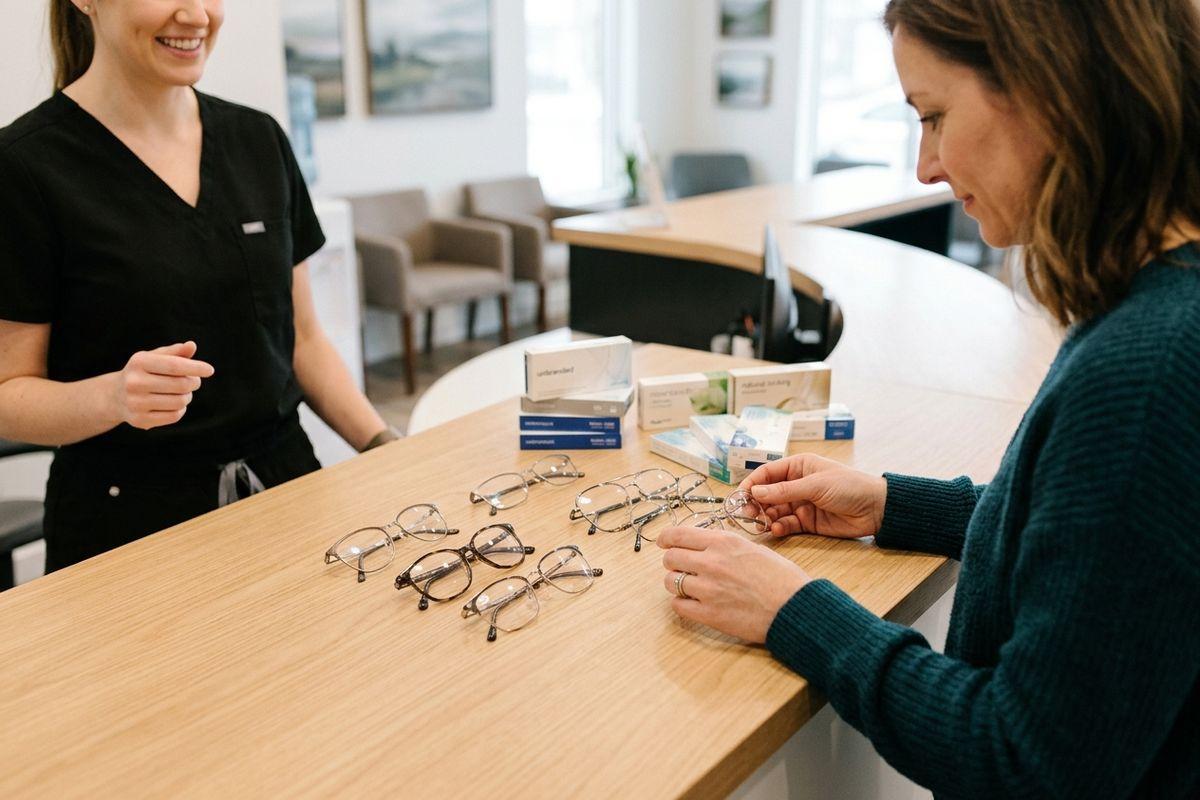
You’ve had a glasses prescription for years, but maybe you’re thinking about trying out contact lenses. It’s tempting to think that because you already know your numbers, you don’t need another appointment. But at Thornhill Vision Care, we want you to know why you can’t use the prescriptions interchangeably.
Contact lens prescriptions and glasses prescriptions are not the same, and one cannot be used in place of the other. They measure different things, and using the wrong prescription can affect how clearly you see and how your eyes feel throughout the day. If you’re curious about contacts, it’s important to schedule a contact lens fitting with your eye doctor.
What a Glasses Prescription Covers
Your glasses sit about 12 to 14 millimeters away from your eye. That small gap matters when calculating how much correction your lenses need, and a glasses prescription is designed to account for that distance.
It typically includes 3 measurements.
- Sphere (SPH), which corrects nearsightedness or farsightedness
- Cylinder (CYL) and axis, which address astigmatism
- Add (ADD), which is included for multifocal lenses only
What a Contact Lens Prescription Includes
Extra Measurements
A contact lens rests directly on your cornea, which is the clear front surface of your eye. Because of that change, the prescription power often needs to be adjusted, and the eye doctor also needs to know how the lens will sit on your eye.
That’s why a contact lens prescription includes measurements you won’t find on a glasses prescription:
- Base Curve (BC), which matches the curvature of your cornea so the lens sits comfortably
- Diameter (DIA), which determines how wide the lens is so it stays properly positioned
- Lens brand and material, which is specified based on your eye health, if you have dry eye, and how long you plan to wear them
These details are unique to you. Multiple people with the same vision prescription can need completely different contact lenses. The range of contact lens types available reflects just how individual that fit can be.
Can I Wear Contacts If I Have Astigmatism?
If you have astigmatism, contacts get a little more specific, but there are options for you. You and your eye doctor can discuss whether toric lenses may be a good fit. Toric lenses are designed with a weighted bottom to keep them from rotating on your eye. Because of this extra detail, if you have astigmatism, it’s important to get guidance from an eye doctor if you want to wear contacts.
Can You Convert a Glasses Prescription to Contacts?
It might seem like there should be a formula for this, but formulas aren’t as reliable as you may think.
Online calculators and conversion charts can’t measure your cornea’s shape, check your eye health, or tell you which lens material suits your eyes. They only work with numbers, and contact lens fitting requires more than numbers.
A separate contact lens fitting with an eye doctor in Thornhill is required before a contact lens prescription can be written. There’s no shortcut to a safe, accurate result.
What a Contact Lens Fitting Involves
The Fitting Process
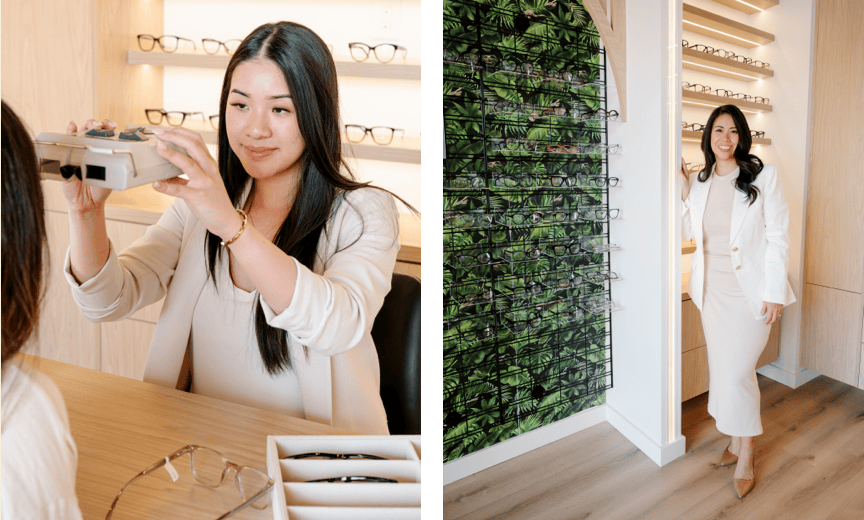
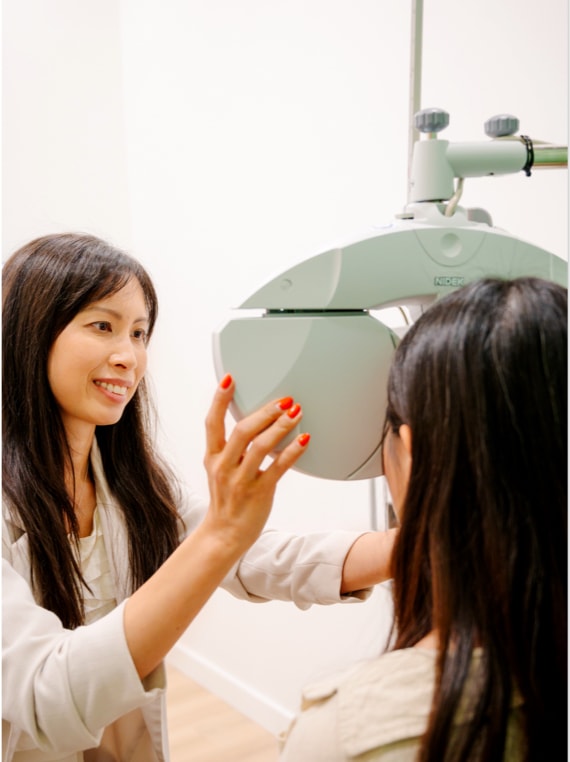
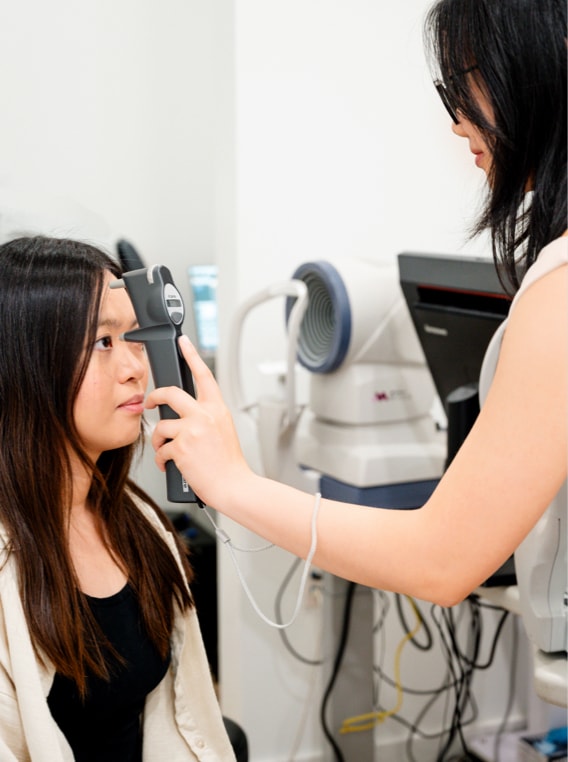
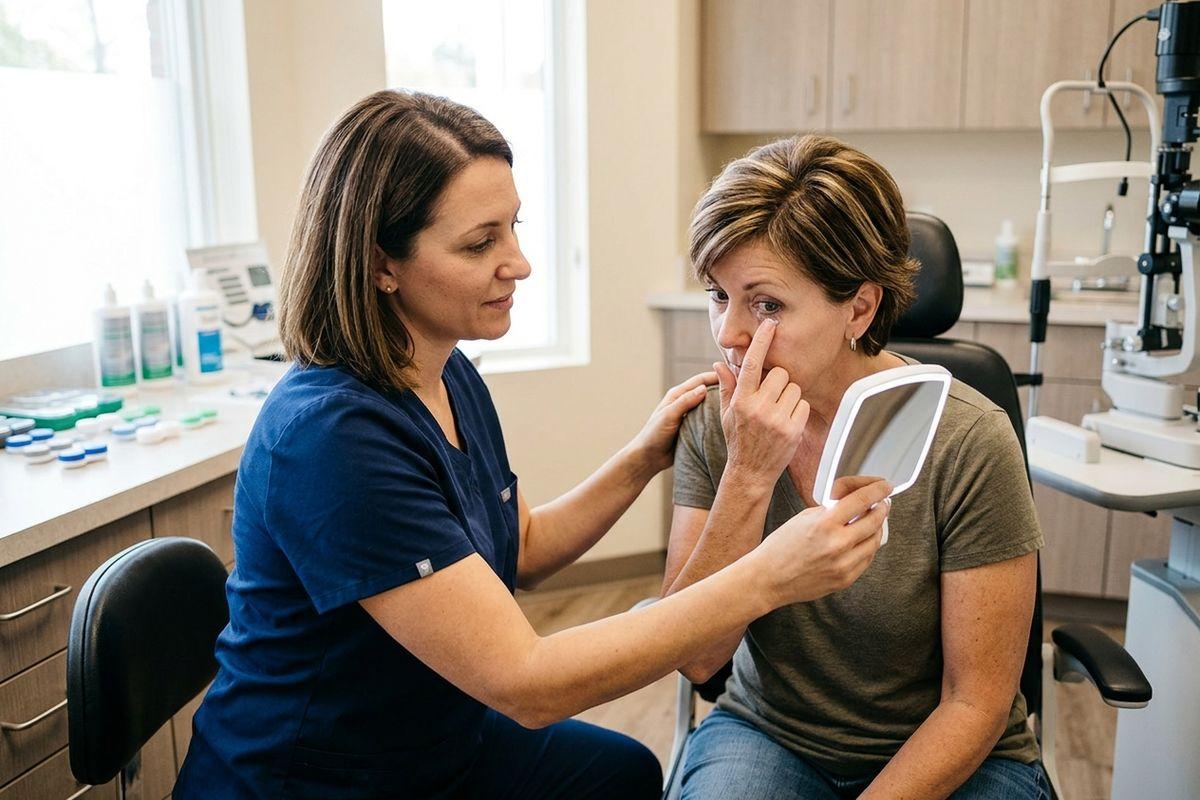
A contact lens fitting is more thorough than simply trying on a pair of lenses. Our eye doctor can check your vision and overall eye health first, then takes precise measurements of your cornea. From there, trial lenses are placed on your eyes so the doctor can assess both comfort and clarity before finalizing anything.
Multifocal contact lenses can require even more customization than standard lenses. Because there can be significant variation between different contact lens designs, finding the right fit may take two or three visits to ensure the lenses are comfortable and provide the intended visual correction. Unlike glasses, multifocal contact lenses often require additional follow-up appointments to fine-tune both fit and performance.
It’s a process that takes your specific eyes into account, not just your prescription numbers. The diagnostic tools used during the exam help map your cornea with a level of detail that supports a more accurate fit.
Why Fit Matters for Your Eye Health
A contact lens that doesn’t fit properly can restrict oxygen flow to your cornea or shift around during wear. Over time, that can cause discomfort or affect your eye health in ways that aren’t always obvious at first.
Contact lens prescriptions typically expire after 1 year, so staying current with your fitting appointments helps you stay comfortable and keeps your eyes healthy. If dry eye is something you deal with, it’s worth asking about lens options designed for dry or sensitive eyes, since the right material can make a real difference in how contacts feel throughout the day.
Schedule Your Contact Lens Fitting
If you’re curious about making the switch to contacts, or if it’s been a while since your last fitting, our team at Thornhill Vision Care can walk you through every step. They can take the measurements needed, help you find a lens that works for your eyes, and make sure you understand your options clearly before making any decisions. Book your contact lens fitting today.