Nearsightedness is one of the more common reasons people come in for an eye exam. It makes faraway things look blurry, and it often develops slowly enough that you don’t notice how much you’ve started squinting.
The right myopia glasses start with an accurate prescription, then pair it with lenses and frames that suit how you spend your day. For kids with changing prescriptions, we may also talk about whether myopia control options make sense alongside regular correction.
What Nearsightedness Means for Your Daily Vision
Myopia, or nearsightedness, makes distant objects look blurry while close-up tasks stay clear. It usually happens when the eye has grown too long from front to back, or the cornea at the front of the eye is too curved. This means light focuses in front of the retina instead of directly on it.
It often starts in school-age children. If one or both parents are nearsighted, your child’s chances of developing myopia go up. Adults notice it differently. Driving at night, reading a menu board, or spotting a friend across the room can feel like guesswork.
Signs You May Notice
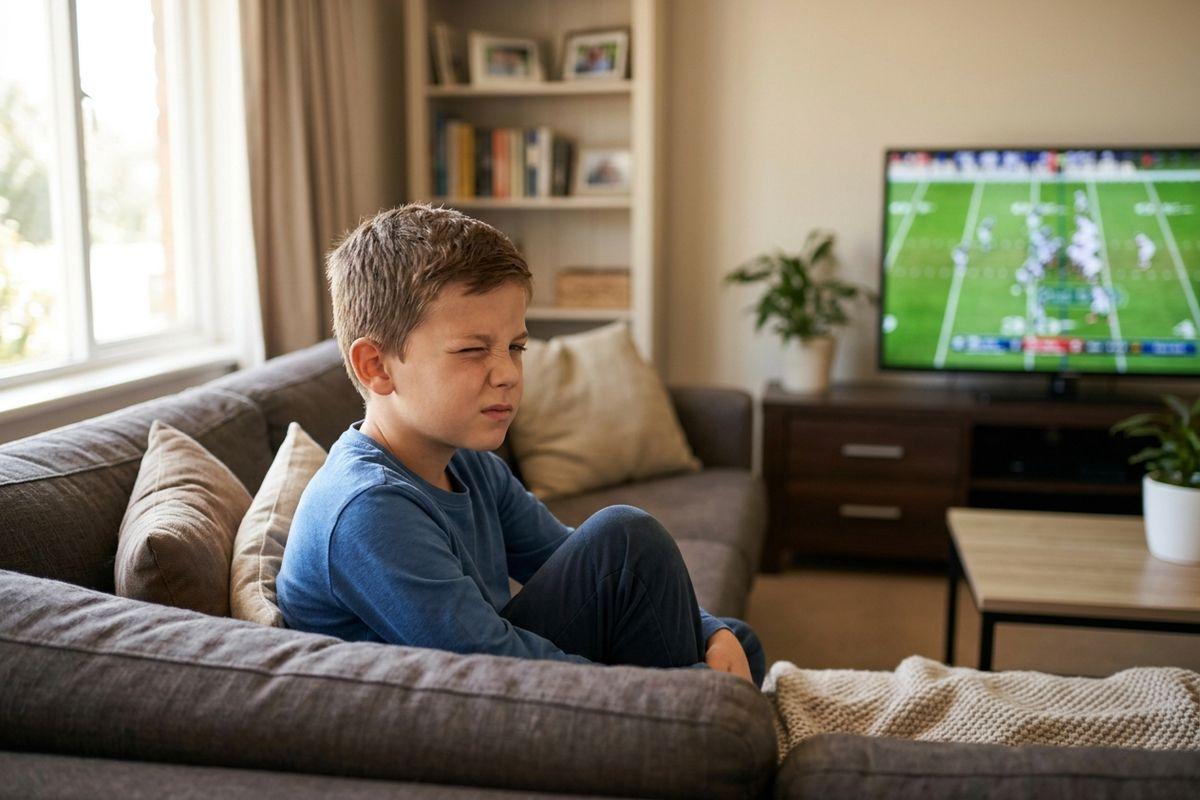
Kids don’t always complain about their vision, since they may not know it’s supposed to look any different. Watch for a few of these signs in yourself or your child:
- Squinting to see road signs or the classroom whiteboard
- Headaches after reading or screen time
- Sitting close to the TV
- Rubbing their eyes often
- Trouble seeing clearly while driving at night
How Your Myopia Prescription Is Measured
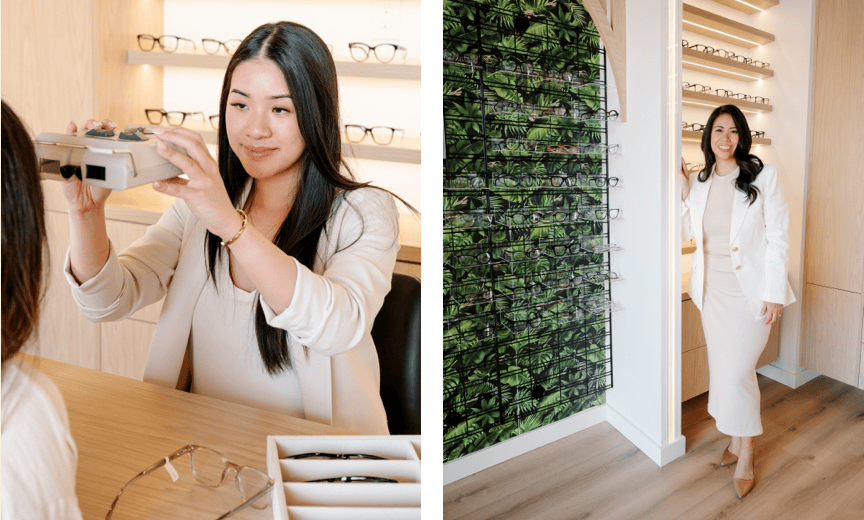
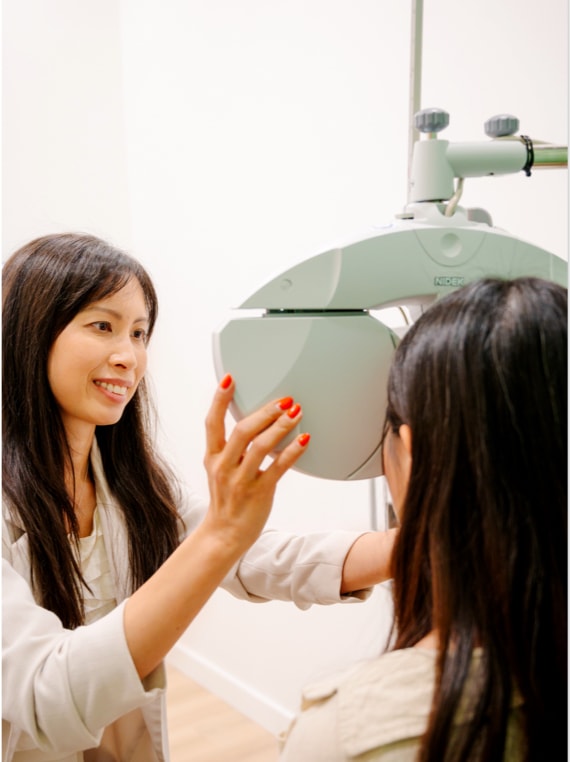
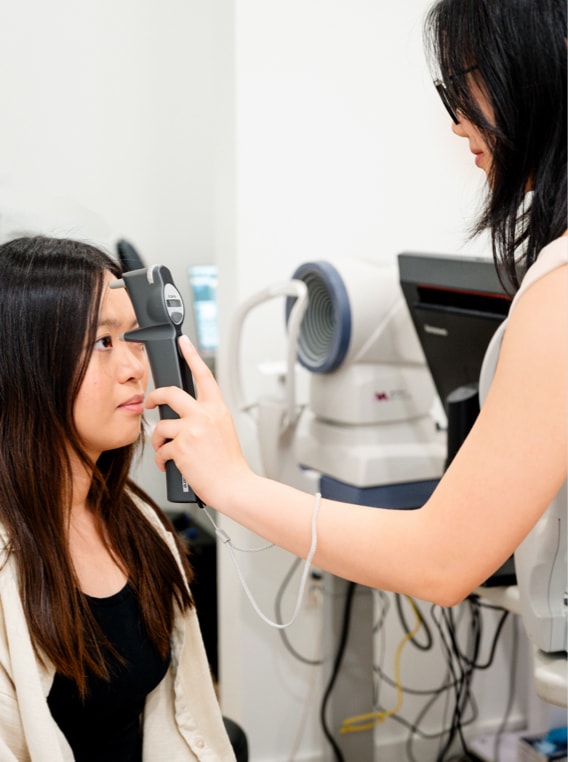
During your eye exam, you’ll read a distance chart while your optometrist places different lens powers in front of your eyes. Tell us which option looks clearer, and we’ll use your answers to fine-tune your prescription. There are also ways that your optometrist can examine a child’s eyes without requiring any response.
On your prescription, a minus sign means you’re nearsighted, and a plus sign means you’re farsighted.
The bigger the number after the minus sign, the more lens power you need to see clearly at a distance. A prescription like -4.75 usually falls in the moderate range, and glasses can correct it. With a higher number, your lenses do more of the work, which affects the lens material and frame size we’ll suggest.
Lens Options for Myopia Glasses
Your lifestyle shapes which lens suits you. Ask your optometrist about these options at your appointment:
- Single vision lenses, which correct distance vision across the whole lens
- Progressive lenses, which correct near, middle, and distance vision in 1 pair
- High-index lenses, which can be thinner and lighter for stronger prescriptions
We mainly work with HOYA lenses, which come in a range of materials and designs. Your optometrist can help you match those features to how you use your glasses.
Myopia Control Glasses for Children
For kids whose prescriptions keep climbing, glasses can do more than sharpen distance vision. Myopia control lenses are designed to help slow how quickly nearsightedness progresses.
We offer HOYA MiYOSMART lenses, including the newer MiYOSMART iQ. The centre of each lens gives your child clear vision, while a pattern of tiny segments around it is designed to help manage how their myopia changes over time.
Slowing progression matters because high myopia is linked to a greater risk of eye conditions later in life, such as retinal detachment and glaucoma. Whether MiYOSMART iQ suits your child depends on their age and how fast their prescription is changing. Your optometrist can go over the options with you and help you decide on a plan.
How to Choose Frames That Fit Your Life
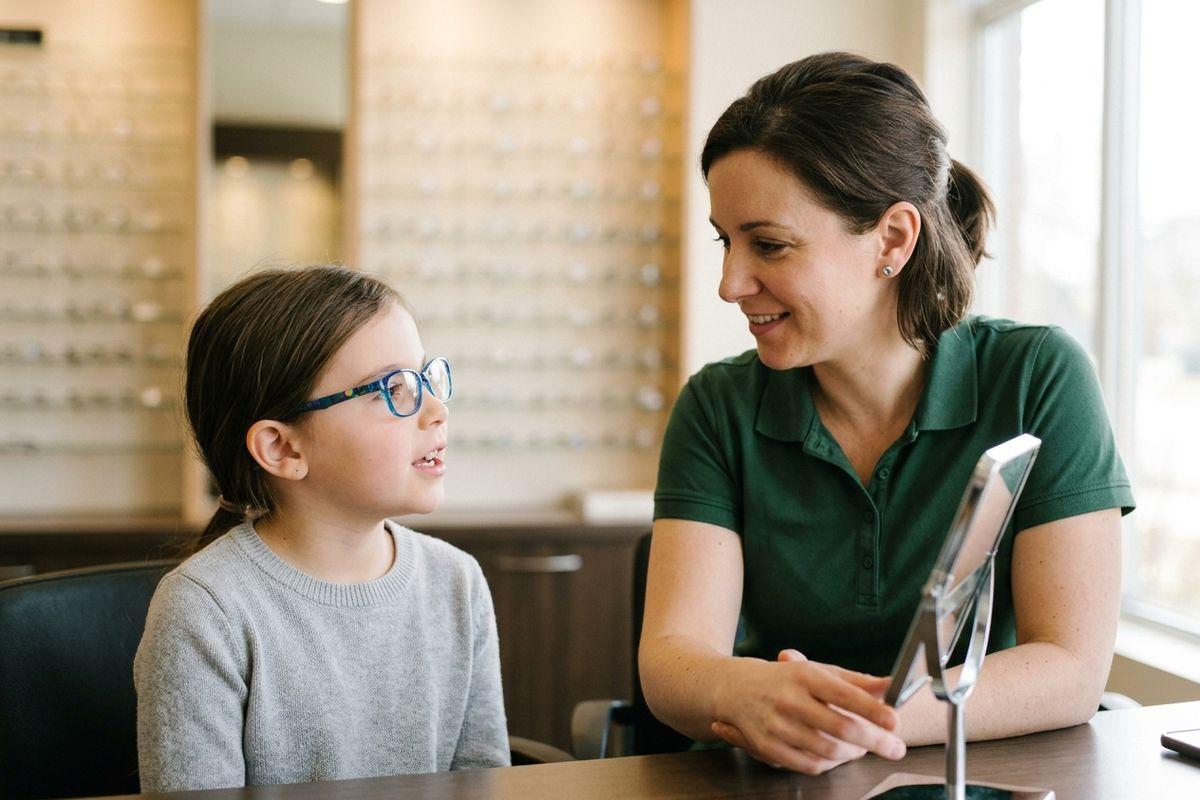
If your prescription is mild, nearly any frame style works, so pick what you like. Stronger prescriptions do better in smaller frames. Myopia lenses are thicker at the edges, and a smaller lens shape keeps that thickness down.
Thicker acetate rims can also hide the lens edge, which gives your glasses a slimmer look from the side.
Frames for Kids and Teens
Kids need frames that hold up to recess and the bottom of a backpack. Look for lightweight, durable materials and flexible hinges that bend without snapping.
Fit matters just as much for kids. When the frame sits properly, the lenses stay lined up with your child’s eyes, which is especially important for myopia control lenses to work as designed.
How Often Should You Book Your Eye Exam?
Book an exam before your next scheduled visit if you notice new blurriness, squinting, or headaches, or if symptoms get worse. Bring your child in for a yearly eye exam, since their prescription can change from one school year to the next.
If your child wears myopia control lenses, regular follow-ups let your optometrist track how their eyes are changing. We can then adjust the prescription or plan if needed.
Get Fitted for Myopia Glasses That Suit Your Routine
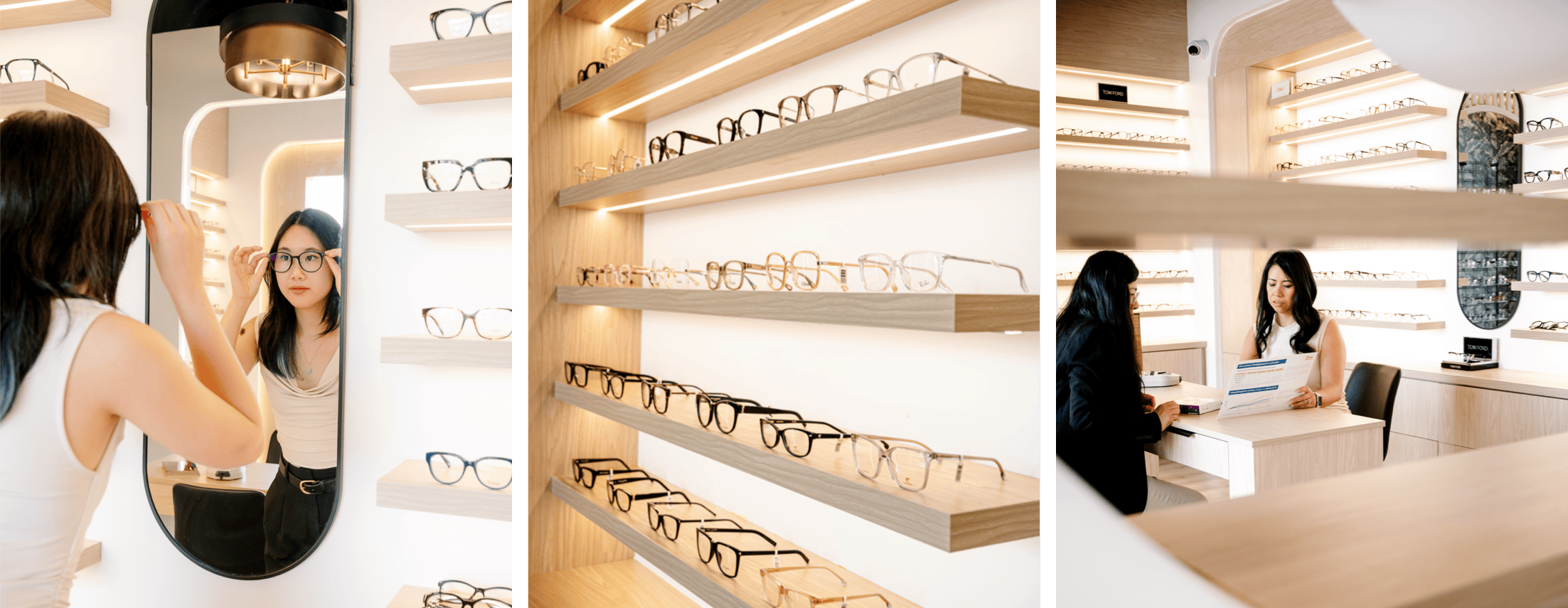
If highway signs look fuzzy until the last second, or your child keeps inching toward the TV, it may be time for a fresh look at your prescription. At Thornhill Vision Care, we’ll explain what your numbers mean and let you try on frames until you find a pair you like wearing.
Got a child whose prescription changes every year? Ask us whether MiYOSMART lenses could help slow their myopia. Book your eye exam and bring your questions with you.