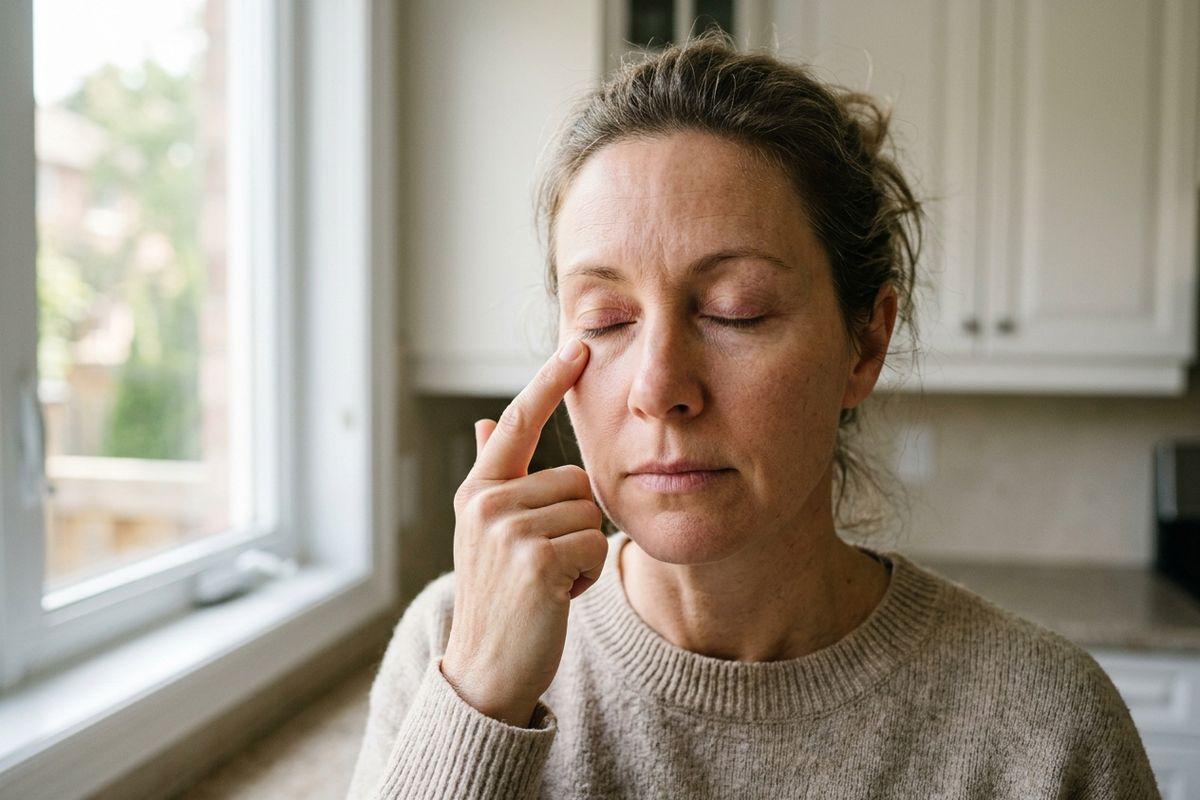
Adult with eyes closed touching the skin under one eye with a fingertip, standing in a kitchen beside a bright window.
Many people put up with dry, scratchy eyes for months before bringing it up at their next eye exam. It’s easy to blame a long day on the computer or the dry air indoors and move on.
But the problem often starts in the tiny oil glands along the edges of your eyelids. When those glands get blocked or start producing lower-quality oil, the condition is called meibomian gland dysfunction (MGD), and it can leave your eyes feeling dry and gritty.
What Meibomian Gland Dysfunction Means for Your Eyes
Each eyelid has a row of small oil glands called meibomian glands, tucked right where your lashes meet the lid. You can’t see them in the mirror. Every time you blink, though, they release a thin layer of oil that coats your tears and slows down how fast they evaporate.
MGD develops when those glands become blocked or when the oil they produce changes in quality. The result can show up as irritation you notice every day, or as nothing at all. Some people have MGD without a single symptom, which is one reason it often turns up during a routine eye exam rather than a visit for discomfort.
Signs and Symptoms to Watch For
MGD tends to build slowly, so you might get used to the discomfort before you realize something’s off. Pay attention to how your eyes feel day to day, and watch for a few of these:
- Scratchy eyelids
- A burning feeling
- A gritty or sandy feeling, like there’s something in your eye
- Watery eyes, even when they feel dry
- Blurry vision that clears up after you blink
You might also notice changes to your eyelids or the way your contacts feel, such as:
- Redness along the edges of your lids
- Crusty or flaky lid margins
- Styes that keep coming back
- Contact lenses that aren’t as comfortable as they used to be
If any of these stick around or get worse, book a visit so your optometrist can take a closer look.
What Causes Blocked Meibomian Glands?
Often, the oil itself is the problem. Thickened oil and clogged openings can stop the glands from releasing oil the way they should, and certain medications, including some eye drops, can also affect how they work.
Who Tends to Be Affected
MGD can develop at any age, but a few things can raise your chances:
- Getting older
- Hormone changes
- Wearing contact lenses
- Allergies
- Some immune-related conditions
Hormones play a big part, which is one reason MGD comes up so often in women in their 40s and 50s.

What Happens if MGD Goes Untreated?
MGD and dry eye disease (DED) are closely linked, and they often show up together. When blocked glands go unmanaged, they can also lead to inflamed eyelids and ongoing irritation on the surface of your eye.
Over time, that irritation can make long stretches of reading or night driving uncomfortable. You might find yourself reaching for eye drops more often just to get through the afternoon.
If you’re thinking about eye surgery, your eyelid health matters too. MGD is associated with a higher chance of inflammation before or after procedures like cataract surgery, so tell your optometrist about any irritation you’ve noticed.
How Optometrists Check for MGD
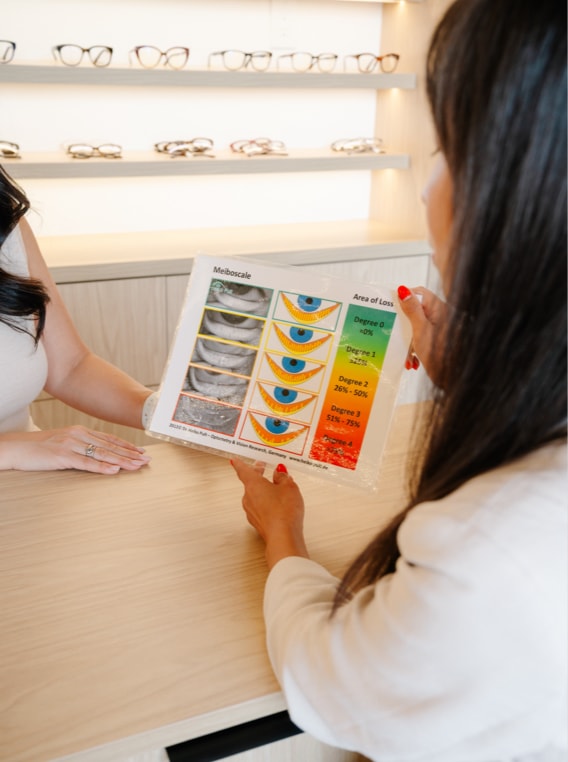
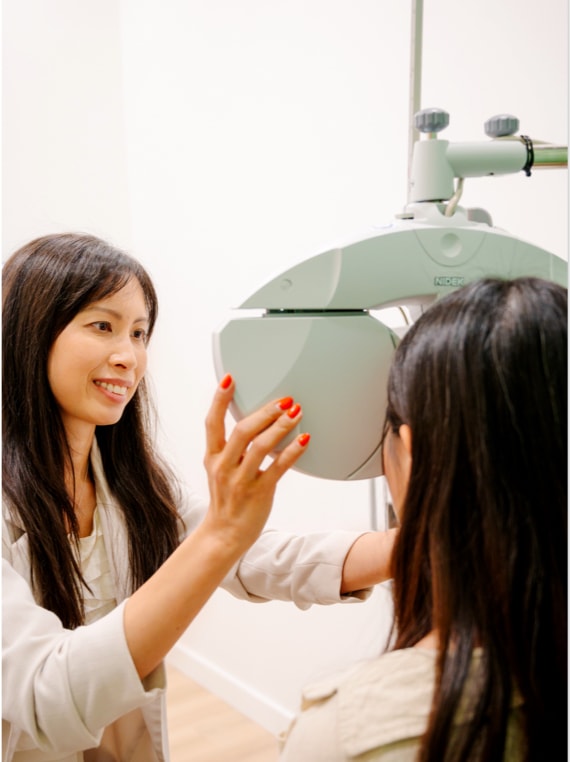
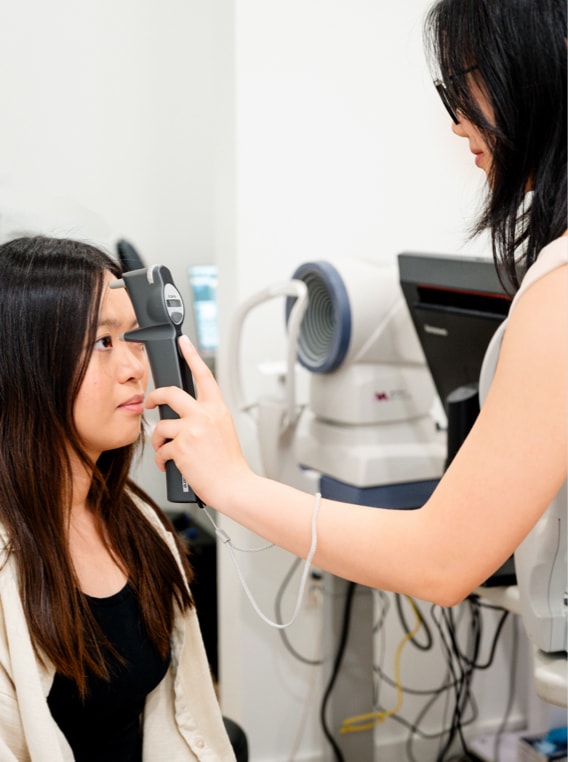
At your appointment, we’ll closely examine your eyelid margins and tear film to see how well your glands are working and how your eye surface is holding up. We may gently press on your lid to see how easily the oil flows and what it looks like. Imaging can also give us a closer view of the glands themselves.
You can leave with a clear picture of what’s going on with your eyes and why certain symptoms keep coming back.
How to Treat Blocked Meibomian Glands
Treatment depends on what your exam shows, so we’ll talk through options that fit your routine and comfort level. For many people, the plan starts at home. Warm compresses can soften thickened oil so it flows more easily, and gentle lid cleaning can help keep the gland openings clear.
When home care isn’t enough, in-office treatments like intense pulsed light (IPL) therapy may help.
How quickly your eyes respond can vary, and it’s normal for your plan to need a few adjustments along the way. Regular checkups let us track how your glands and tear film are doing and adjust your care as your eyes change.
Find Out What’s Behind Your Gritty Eyes
If your eyes keep burning or feeling gritty by mid-afternoon, book an appointment with Thornhill Vision Care. Our dry eye centre is set up to look for the root cause of your symptoms, starting with your eyelids and tear film.
From there, we’ll work with you on a plan that makes sense for your day-to-day life. And we’ll check in on how your glands respond over time.